

MiniMax H3 and Seedance 2.5 represent the same broad shift in generative media: an AI video generator is no longer expected to make only silent, attractive footage. It is increasingly expected to understand images, video clips, audio references, dialogue, camera language, and editing instructions as parts of one production brief.
The two models approach that goal differently. MiniMax H3 is the stronger choice for open-weight experimentation, explicitly structured audiovisual prompts, and workflows that need inspectable model components. Seedance 2.5 is the more ambitious closed production system for longer single generations, reference-led direction, and targeted editing. Kling 3.0 and Veo 3.1 remain serious alternatives, while Seedance 2.0 is still a useful baseline. Sora 2 matters historically, but it is no longer a sensible foundation for a new workflow because OpenAI has begun retiring the product and API.
This article compares published model capabilities as of August 11, 2026. It does not pretend that vendor demos, internal benchmarks, and third-party wrappers form a controlled laboratory test. Where a feature belongs to a platform rather than the underlying model, that distinction is stated.
The short verdict
- Choose MiniMax H3 when native stereo audio, image-to-video control, detailed prompt structure, open weights, or research flexibility matter most.
- Choose Seedance 2.5 when you need a longer native scene, reference-video direction, green-screen or white-model control, and selective audiovisual editing.
- Keep Seedance 2.0 in the workflow when its 15-second multimodal generation and established reference limits already solve the job.
- Choose Kling 3.0 Omni for storyboard-driven multi-shot work, multilingual dialogue, and character or voice reference across scenes.
- Choose Veo 3.1 for a mature cloud API, high visual fidelity, first-and-last-frame interpolation, and a production ecosystem that includes Flow, Vertex AI, and the Gemini API.
- Treat Sora 2 as a legacy comparison, not a new production dependency.
Creators who want to explore H3 without first assembling a local inference stack can start with a browser-based MiniMax H3 AI video generator and use the technical sections below to decide which generation mode fits the shot.
MiniMax H3 vs Seedance 2.5 at a glance
| Model | Native generation length | Audio | Image and reference control | Standout advantage | Access model |
|---|---|---|---|---|---|
| MiniMax H3 | 4–15 seconds | Native 32 kHz stereo | Text-to-video, first frame, last frame, first-and-last frame, and multimodal reference generation | Open H3-Base weights and unusually explicit audiovisual prompting | Open-weight base; hosted Context-IR and 2K regeneration components |
| Seedance 2.5 | Up to 30 seconds in one generation | Joint audio-video generation | Stronger reference-video interpretation, editing, white-model control, and green-screen workflows | Longer narrative generation and production-oriented editing | Closed platform model |
| Seedance 2.0 | Up to 15 seconds | Dual-channel audio | Up to 9 images, 3 videos, and 3 audio clips in the published workflow | Proven multimodal reference breadth | Closed platform model |
| Kling 3.0 / 3.0 Omni | Up to 15 seconds | Native multilingual audio | Text, image, video, and audio input; reference video and storyboard control | Multi-shot direction and multilingual character dialogue | Closed platform model |
| Veo 3.1 | 4, 6, or 8 seconds per base generation | Native audio, always on | Image-to-video, first-and-last frame, up to 3 reference images, and extension | Cloud production ecosystem and strong audiovisual fidelity | Closed API and product ecosystem |
| Sora 2 | Legacy model | Synchronized dialogue, sound effects, and ambience | Text and image input in its released form | Important progress in physical behavior and world-state persistence | Web/App discontinued; API scheduled for retirement |
The table deliberately avoids a single “quality” score. A 30-second model is not automatically better than an 8-second model, and a 4K delivery option does not prove better motion, identity, dialogue, or prompt adherence. The relevant question is whether a model reduces the number of failed generations and post-production repairs for a particular shot.
What makes MiniMax H3 different?
MiniMax describes H3 as a general-purpose multimodal generation model rather than a conventional video-only system. It understands a context made from text, images, videos, and audio, then generates video and native stereo sound together. The published system supports 24 fps output, 32 kHz stereo audio, durations from 4 to 15 seconds, and a range of aspect ratios. Its 768p base result can be regenerated at up to 2K.
The architecture matters more than the marketing label. The official MiniMax H3 repository describes three major stages:
- H3-Context-IR interprets a free-form multimodal brief and turns the relationships among text, images, audio, and video into a structured intermediate representation.
- H3-Base jointly predicts visual and audio latent sequences, producing a 768p audiovisual result.
- H3-Regenerate-2K feeds the base result and original context back through the model to recreate detail at higher resolution.
H3 therefore does not simply generate a silent clip and attach a soundtrack. Its single-stream, 33-billion-parameter H3-Omni Transformer predicts audio and video latents together. A dedicated H3-AudioVAE encodes and decodes the left and right channels independently before recombining them as stereo. This design makes spatial ambience, timed impacts, dialogue, music, and image motion parts of the same temporal problem.
There is an important openness caveat. MiniMax has released the H3-Base checkpoints for FL2VA and Ref2VA workflows, along with the tokenizer, text encoder, visual VAE, and audio VAE. However, the hosted Context-IR orchestration system and the 2K regeneration module are not included in the initial open release. H3 is still the most inspectable system in this comparison, but “open weights” does not mean that every component behind the official 2K experience runs locally.
What changed from Seedance 2.0 to Seedance 2.5?
Seedance 2.0 already established a demanding baseline. In its official launch announcement, ByteDance describes a unified multimodal audio-video architecture that accepts text, images, audio, and video. The published input ceiling is nine images, three video clips, and three audio clips. It produces up to 15 seconds of multi-shot video with dual-channel audio and can use references for composition, motion, camera movement, effects, appearance, and sound.
Seedance 2.5 moves the product story from “multimodal generation” toward “production control.” The official Seedance 2.5 page highlights three changes:
- a native generation can run for up to 30 seconds and can be extended twice;
- reference videos are interpreted for intention, framing, and cinematic language rather than only copied as motion;
- editing responds to a wider range of visual and audio changes, with white-model control and green-screen editing for complex blocking.
That is a meaningful difference. Seedance 2.0 asks, “How many kinds of creative evidence can the model consume?” Seedance 2.5 asks, “How much of a directed scene can remain coherent before the editor has to split it into another generation?”
Dreamina's Seedance 2.5 product page advertises additional numbers, including 4K delivery and as many as 50 multimodal inputs. Those may be valuable platform capabilities, but buyers should verify what is currently available in their region, plan, and interface. The conservative model-level comparison is the one ByteDance publishes directly: 30-second storytelling, more precise reference control, and stronger audiovisual editing.
1. Prompt adherence and multi-shot storytelling
All five current models can respond to cinematic language, but their control surfaces are different.
MiniMax H3 exposes the clearest prompt grammar. Its official prompt-writing guide separates the prompt into an integrated_multimodal_description, an overall_soundscape, and non_diegetic_music. It asks writers to number shots, assign stable speaker IDs, preserve dialogue inside explicit language tags, and describe camera movement as a combination of motion type, amplitude, and speed. That structure is demanding, but it reduces ambiguity between what the audience hears, what characters hear, and what the camera does.
Seedance 2.5 appears optimized for richer direction through reference material and editing instructions. Its longer native timeline gives a prompt more room for setup, action, reaction, and resolution. The trade-off is that longer generation increases the number of things that must remain stable: identity, costume, props, lighting, geography, voice, and causal motion.
Kling 3.0 is particularly interesting for explicit shot planning. In the official Kling 3.0 announcement, Kuaishou says Video 3.0 understands multi-scene instructions and supports shot-reverse-shot dialogue, cross-cutting, voice-over, and transitions. Video 3.0 Omni adds a storyboard interface in which duration, shot size, perspective, narrative content, and camera movement can be defined per shot.
Veo 3.1 is less verbose at the syntax level but strong at translating normal cinematic prose. Google positions it around prompt adherence, realism, physics, and audiovisual alignment. For teams already using Flow, its surrounding editing and sequencing tools may matter as much as the base model.
Practical conclusion: H3 is best when a prompt engineer wants an explicit specification. Seedance 2.5 and Kling 3.0 are more attractive when a director wants references and shot planning to carry part of the instruction burden. Veo 3.1 is the easiest fit for a managed Google production pipeline.
2. Native audio, dialogue, and sound design
Audio is where this comparison becomes more than a contest between moving pictures.
H3 publishes the most technically specific audio path: 32 kHz stereo, an audio VAE, joint audio-video latent prediction, and stable dialogue support for eleven named languages. Its prompt format also distinguishes three layers that creators often accidentally mix:
- dialogue, singing, and visible diegetic sound events inside the shot description;
- ambience and physical effects in
overall_soundscape; - audience-only score in
non_diegetic_music.
That separation is useful for product films, dialogue scenes, ASMR-style material, music-led edits, and any shot where stereo space is part of the result. It also makes troubleshooting more precise: a creator can remove non-diegetic music without stripping away room tone or a character's spoken line.
Seedance 2.0 already generates dialogue, sound effects, background music, and dual-channel audio as part of one audiovisual result. ByteDance also acknowledges that occasional audio distortion remains possible. Seedance 2.5 continues the joint-generation approach while expanding audiovisual editing, but its public model page currently offers fewer audio implementation details than H3's open repository.
Kling 3.0 emphasizes multilingual production. Its official release names English, Chinese, Japanese, Korean, and Spanish, plus English accents and Chinese dialects. It can place multiple characters with different languages in one dialogue scene and control content, delivery, and speaking order.
Veo 3.1 generates native dialogue, ambience, and synchronized sound effects. Google exposes audio cues directly in the API prompt and makes audio always on for the Veo 3.1 family. Its strongest advantage is operational: the same capability is available through consumer products, filmmaking tools, and cloud APIs.
Sora 2 demonstrated realistic soundscapes and synchronized audio, but access now outweighs capability. OpenAI states that the Sora Web and App experiences ended on April 26, 2026, and that the API is scheduled for discontinuation on September 24, 2026. It should not be selected for a new long-lived integration.
3. Image-to-video and multimodal references
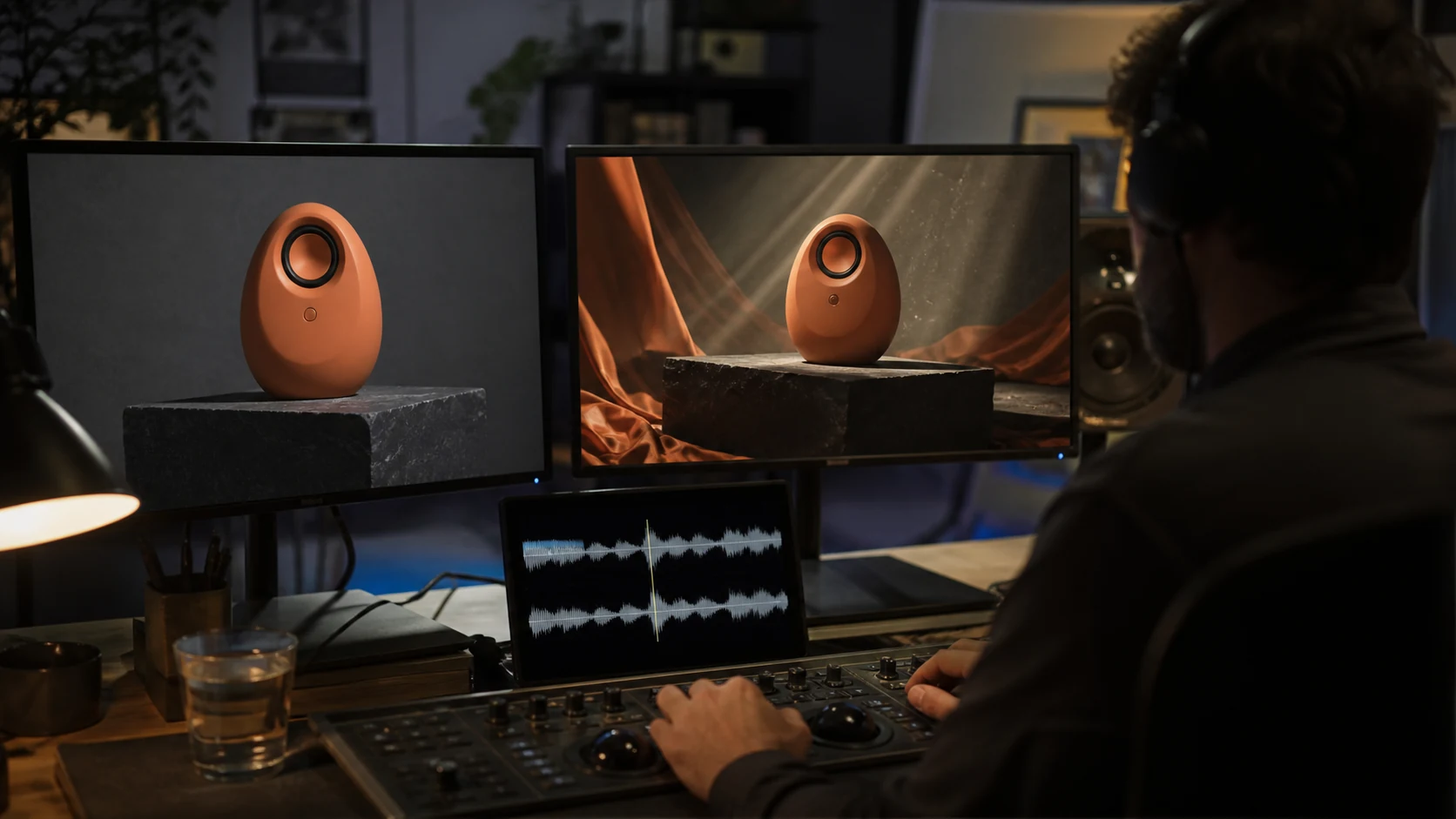
Image-to-video is not one task. A source image can act as a literal first frame, a required last frame, an identity reference, a style reference, or one ingredient among many. Results improve when the model and prompt agree about that role.
MiniMax H3 separates two model families. H3-Base-FL2VA handles text-to-video, first-frame, last-frame, and first-and-last-frame generation with zero, one, or two images. H3-Base-Ref2VA accepts up to nine images, three videos, and three audio clips, subject to a combined file ceiling. This is a strong design for creators who need to distinguish “begin exactly here” from “preserve this person's identity while inventing a new shot.”
Seedance 2.0 also supports broad multimodal referencing, while Seedance 2.5 focuses on interpreting the intention and cinematic grammar of a reference video. That could be more useful than literal motion transfer when the goal is to borrow blocking, lens behavior, or scene rhythm without copying the source shot mechanically.
Kling 3.0 Video supports reference videos and multiple images for characters, objects, and scenes. The Omni variant can extract visual traits and voice characteristics from a reference video and carry them into new scenes. This makes it competitive for recurring characters and branded episodic content.
Veo 3.1 supports an initial image, first-and-last-frame interpolation, and up to three reference images through its “Ingredients to Video” workflow. Google also provides native 9:16 output and 1080p or 4K delivery options for supported eight-second workflows. Its reference ceiling is lower than H3 or Seedance 2.0, but the constraint can make the brief easier to reason about.
Practical conclusion: choose H3 for explicit keyframe semantics and complex mixed references; Seedance 2.5 for reference-video direction and post-generation changes; Kling 3.0 Omni for identity, voice, and storyboard continuity; or Veo 3.1 for a simpler managed image-to-video API.
4. Editing, continuation, and controllability
Generation quality is expensive when every correction requires a complete reroll. Editing capability therefore deserves as much attention as first-pass beauty.
Seedance 2.5 has the clearest editing-first pitch. ByteDance says the model responds to a wider range of audio and visual editing requests and supports production techniques such as green-screen editing and white-model control. It is the strongest option on paper for teams that expect iterative notes: replace a prop, refine a region, alter a performance, or preserve the timeline while changing one creative layer.
H3 approaches editing as generalized reference and regeneration. Its Context-IR is designed to understand natural-language relationships among source materials and the target. The model's open components also create opportunities for research, fine-tuning, and custom preprocessing. The limitation is that reproducing the complete official experience requires more than downloading one checkpoint.
Kling 3.0 integrates generation and in-video editing inside its multimodal family. Combined with storyboard control, it suits workflows where the director wants to revise individual shots without abandoning the larger narrative plan.
Veo 3.1 offers a pragmatic alternative: extend a Veo-generated clip in seven-second increments, create a transition between first and last frames, or guide a new clip with ingredient images. Extension can build a much longer sequence, but it is not the same as generating a coherent 30-second scene in one pass. Each extension inherits the final second of the previous clip, so continuity still needs review.
5. Duration, resolution, and production economics
Headline specifications are useful only when interpreted correctly.
H3 can generate from 4 to 15 seconds. Its base model produces 768p, while 2K comes from an in-context regeneration stage that reuses the original context rather than applying a conventional super-resolution filter. This may recover context-dependent details, but it also adds another stage to the pipeline.
Seedance 2.5's 30-second native window is the clearest duration advantage. It can hold a longer dramatic beat without stitching separate generations. That does not guarantee thirty perfect seconds; it means the model is allowed to solve the longer continuity problem in one generation.
Kling 3.0 and Seedance 2.0 both target up to 15 seconds, a useful middle ground for dialogue exchanges, social ads, and multi-shot concepts. Veo 3.1's base API clips are four, six, or eight seconds. Reference images, 1080p, and 4K require the eight-second setting, and video extension is limited to 720p. Those restrictions are important when estimating a real workflow.
Do not compare “2K,” “4K,” and “1080p” as if they were one measurement of quality. Ask whether the resolution is native, regenerated, or upscaled; whether the high-resolution mode changes duration or reference support; and whether small text, faces, hands, and fast motion remain stable. Delivery resolution cannot repair a broken performance.
6. Open weights, local deployment, and platform risk
MiniMax H3 wins this category, with qualifications. Its H3-Base weights and major encoding and decoding components are available under the MiniMax H3 Community License. The repository documents local serving through frameworks including SGLang, vLLM, Diffusers, and ComfyUI. A 33B dense audiovisual transformer is not a lightweight desktop model, however, and the official examples recommend substantial GPU resources.
Seedance 2.0, Seedance 2.5, Kling 3.0, and Veo 3.1 are closed services. Their advantage is convenience: the vendor operates inference and ships a product or API. Their risk is dependency on regional access, pricing, moderation, product tiers, and feature changes.
Sora 2 demonstrates the strongest version of platform risk. It was a flagship model in 2025; less than a year later, its consumer product had closed and its API had a retirement date. The lesson is not that closed models are unreliable. It is that teams should keep prompts, source assets, timing plans, and post-production projects portable enough to switch generation providers.
MiniMax H3 prompts: three production patterns
H3 can accept ordinary prose, but its official structure becomes valuable when a scene contains dialogue, synchronized effects, or keyframes. The following original examples are intentionally compact. For more reusable patterns, consult these MiniMax H3 prompt examples and adapt them to the exact mode selected in the generator.
Pattern 1: text-to-audio-video product film
integrated_multimodal_description: [Shot 1] Live-action, premium product cinematography. A medium-wide shot frames a brushed-aluminum espresso machine on a dark stone counter before sunrise. The camera pushes in with small amplitude at slow speed as the power light turns on and the pressure gauge rises. [Shot 2] At 00:04.500, the camera cuts to a macro close-up as espresso flows into a clear glass; crema forms in visible layers and a single drop lands on the surface at the end of the shot.

overall_soundscape: Quiet kitchen room tone, one tactile power-switch click, a rising boiler hum, and the close mechanical vibration of the pump. The espresso stream produces a soft liquid hiss followed by one clear ceramic tap.

non_diegetic_music: A restrained electronic pulse at a slow tempo with two low synthesizer notes, fading before the final drop lands.
Why it works: the prompt gives each sound a visible cause, separates the score from the machine audio, and limits the camera to two legible moves.
Pattern 2: image-to-video portrait with dialogue
For the target video, at 0.00 seconds into the target video, <Picture 1> (from [Shot 1]) is fully referenced.

integrated_multimodal_description: [Shot 1] Live-action, naturalistic. The chef in <Picture 1> remains at the same stainless-steel counter, preserving facial identity, white jacket, hand position, kitchen layout, and warm side lighting. The camera trucks left with small amplitude at slow speed as steam begins to rise from the covered pan. The chef with a calm, low voice (S1) looks toward the pan rather than the lens and says: <d>[English] Give it ten more seconds.</d> The chef lifts the lid slightly, then closes it as the steam thickens.

overall_soundscape: Low ventilation noise continues under the gentle simmer of the pan. Fabric shifts at the chef's elbow, the metal lid scrapes once, and a short release of steam rises in volume.

non_diegetic_music: N/A
Why it works: the source image is declared as a literal first frame, identity anchors are named, the character has one stable speaker ID, and the motion develops away from the still rather than merely zooming into it.
Pattern 3: first-and-last-frame transition
How the reference pictures align with the target video — Picture 1 (from Shot 1) aligns with the 0.00-second mark of the target video; Picture 2 (from Shot 1) aligns with the 8.00-second mark of the target video.

integrated_multimodal_description: [Shot 1] Live-action, cinematic. Begin from the exact framing of Picture 1, where the folded electric bicycle stands beside the commuter. The camera holds a static medium-wide shot as the commuter releases the latch, rotates the front section outward, lowers both wheels to the pavement, raises the handlebar, and locks the frame. Each mechanical action completes before the next begins. The bicycle and commuter gradually reach the position, spacing, and final silhouette shown in Picture 2 at 8.00 seconds.

overall_soundscape: Morning street ambience remains soft in the distance. Four distinct mechanical sounds follow the visible sequence: latch release, frame rotation, wheel contact, and the final locking click.

non_diegetic_music: A light pattern of muted wooden percussion at a steady tempo, ending on the final locking click.
Why it works: the prompt describes a causal path between two frames. It does not waste tokens redescribing the still images, and it prevents the model from attempting every transformation at once.
Model-by-model strengths and limitations
MiniMax H3
Best for: advanced prompt engineers, audiovisual research, open-weight pipelines, reference-heavy shots, product content, and teams that need stereo sound.
Watch for: heavy local compute requirements; a full official-quality pipeline that still depends on hosted Context-IR and 2K regeneration; complex reference prompts that reward strict syntax.
H3 is the most technically interesting system here because it makes audio a first-class generative modality and exposes much of the stack. Its prompt grammar is also unusually teachable: visual direction, physical sound, dialogue, and score each have a defined place.
Seedance 2.5
Best for: longer narrative beats, reference-video direction, commercial storytelling, controlled performance, and iterative editing.
Watch for: closed-platform dependency; public specifications that may differ between the core Seed model and Dreamina product features; higher continuity risk in ambitious 30-second scenes.
Seedance 2.5 has the strongest production-director proposition. Its advantage is not just length. It is the combination of longer generation with reference interpretation and localized editing.
Seedance 2.0
Best for: mature 15-second multimodal work, mixed reference assets, complex motion, and existing ByteDance-centered workflows.
Watch for: occasional audio distortion acknowledged by ByteDance; less advanced editing and duration than 2.5; detail and multi-subject consistency limitations in difficult scenes.
Seedance 2.0 should not be dismissed because a newer number exists. A stable, understood model can outperform a newer model operationally when the team already knows its failure modes.
Kling 3.0 and Kling 3.0 Omni
Best for: storyboards, multilingual dialogue, recurring characters, branded multi-shot work, and explicit per-shot direction.
Watch for: feature differences between Video 3.0 and Video 3.0 Omni; subscription and rollout constraints; the need to verify which reference controls are exposed in a chosen plan.
Kling is the closest competitor to Seedance 2.5 for director-oriented control. Its strongest differentiator is the combination of storyboard structure with multilingual voices and reference-led identity.
Veo 3.1
Best for: high-fidelity short clips, Google Cloud integration, first-and-last-frame transitions, vertical delivery, enterprise governance, and scalable API workflows.
Watch for: short base generations; resolution-dependent restrictions; up to three reference images; 720p-only extension; closed-platform cost and policy dependencies.
Veo 3.1 is the safest operational choice for organizations already invested in Google's ecosystem. It may require more clip assembly than Seedance 2.5, but it provides a mature route from prototype to API deployment.
Sora 2
Best for: understanding the recent history of synchronized audiovisual generation and world-model research.
Watch for: everything related to current production. The Sora Web and App products are already discontinued, and the API is scheduled to follow.
Sora 2 remains relevant to the evolution of the field, but a model comparison in 2026 should not present it as an equally available purchasing option.
Which AI video generator should you choose?
There is no universal winner. Use the production constraint that is hardest to repair after generation:
| If your hardest requirement is… | Start with… | Reason |
|---|---|---|
| Open weights and an inspectable audiovisual stack | MiniMax H3 | The base checkpoints and modality components are published |
| Native stereo sound with highly structured prompts | MiniMax H3 | The audio path and prompt layers are explicit |
| A coherent scene longer than 15 seconds | Seedance 2.5 | It supports up to 30 seconds in one generation |
| Reference-video interpretation and targeted editing | Seedance 2.5 | These are central to the 2.5 release |
| Many mixed references in an established workflow | Seedance 2.0 or MiniMax H3 | Both publish broad image, video, and audio reference modes |
| Multilingual multi-character dialogue | Kling 3.0 | The release explicitly emphasizes languages, accents, and speaking order |
| Per-shot storyboard control | Kling 3.0 Omni | It exposes shot duration, size, perspective, and camera movement |
| Google Cloud deployment and managed APIs | Veo 3.1 | It spans Gemini API, Vertex AI, Flow, and other Google products |
| First/last-frame transitions with high-resolution delivery | Veo 3.1 or MiniMax H3 | Both support keyframe paths, with different resolution pipelines |
For most independent creators, the best strategy is not loyalty to one model. Use a portable creative brief, keep reference assets organized, and test the same decisive shot in two candidates. A product hero shot may benefit from H3's sound structure; a 25-second narrative may favor Seedance 2.5; a multilingual conversation may fit Kling; and an enterprise campaign pipeline may justify Veo.
A fair testing method for your own project
To compare models without fooling yourself, create a small evaluation set of three shots:
- Motion test: one subject performs a causal sequence with object contact, weight, and a clear failure condition.
- Identity test: animate a source image while preserving face, clothing, object geometry, lighting, and background layout.
- Audio test: include one line of dialogue, one synchronized physical effect, continuous ambience, and either explicit music or an instruction for no music.
Use equivalent creative intent, not necessarily identical syntax. H3 benefits from its three-field audiovisual format, while another model may perform better with natural prose or UI-based references. Score each output on instruction completion, temporal consistency, identity, physical plausibility, audio-video synchronization, unwanted artifacts, and the amount of repair required.
Most importantly, count usable outputs per unit of time and cost. The model with the prettiest selected demo is less valuable than the model that reliably produces an editable shot.
Frequently asked questions
Is MiniMax H3 an audio model or a video model?
It is an omni-modal audiovisual generation model. H3 accepts combinations of text, images, video, and audio, then jointly generates video and native stereo audio. Calling it only an audio model understates its visual generation and reference capabilities; calling it only a video model misses the joint audio architecture.
Is MiniMax H3 better than Seedance 2.5?
H3 is better suited to open-weight experimentation, explicit audiovisual prompts, stereo output, and inspectable pipelines. Seedance 2.5 is better positioned for 30-second native storytelling, reference-video direction, and production-style editing. The better model depends on which constraint matters more.
Is Seedance 2.5 always better than Seedance 2.0?
No. Seedance 2.5 offers a longer generation window and stronger editing direction, but Seedance 2.0 remains useful when an established 15-second multimodal workflow already produces reliable results. Availability, cost, interface support, and known failure modes can matter more than version number.
Which model is best for image-to-video?
MiniMax H3 is compelling when you need explicit first-frame, last-frame, first-and-last-frame, or mixed-reference semantics. Seedance 2.5 is attractive for reference-video interpretation and editing. Kling 3.0 Omni is strong for identity and storyboard continuity, while Veo 3.1 provides a clean managed API with first/last frames and up to three ingredient images.
Does MiniMax H3 generate synchronized dialogue and sound effects?
Yes. H3 jointly predicts audio and video and supports native 32 kHz stereo. Its prompt guide provides stable speaker IDs, dialogue language tags, shot timing, ambience, physical sound, and audience-only music fields. Output quality still depends on prompt clarity, duration, scene complexity, and the generation workflow.
Can MiniMax H3 run locally?
The H3-Base FL2VA and Ref2VA checkpoints can be deployed locally with supported inference frameworks, but they require substantial hardware. The complete official workflow also uses hosted H3-Context-IR and H3-Regenerate-2K components, so local H3-Base deployment is not identical to the full hosted 2K experience.
Is Sora 2 still available?
Not as a normal Web or App product. OpenAI discontinued those experiences on April 26, 2026, and says the Sora API will be discontinued on September 24, 2026. Existing users should consult OpenAI's current migration and export guidance rather than starting a new dependency on Sora 2.
Final recommendation
MiniMax H3 is the best starting point in this group for creators who want a technically transparent audiovisual model, detailed MiniMax H3 prompts, native stereo sound, and flexible image-to-video modes. Seedance 2.5 is the stronger choice when a production needs a longer continuous generation and sophisticated reference-led editing. Kling 3.0 deserves a serious test for storyboard and multilingual dialogue work, while Veo 3.1 remains a powerful managed option for high-fidelity cloud production.
The larger lesson is that the market is moving beyond “text in, silent clip out.” The winning workflow will treat prompts, images, motion, dialogue, sound design, editing instructions, and delivery format as one portable creative specification—then choose the model that preserves the most important parts with the least repair.